This scientific blog aims to inform North Carolinians about the declining seagrass populations in the Pamlico-Albemarle Sound System. The blog is split into three posts concerning seagrasses: the significance, the decline, and the solution. In the first post, the blog discusses the vital role that seagrasses play in coastal ecosystems. Then, the blog explores the numerous potential causes of the decline in North Carolinian seagrasses. Finally, the blog highlights several proposed solutions for reversing the decline in seagrass populations, including Artificial Seagrass Units and Wave Attenuation Units. By spreading awareness about the disappearing seagrasses, this scientific blog hopes to inspire advocacy for protecting these essential aquatic plants.
A brisk winter breeze glides across the surface of the Pamlico Sound and up the sandy coastline, tickling the cheek of Pat Garber, a marine scientist, author, and North Carolina native. The gust entangles itself playfully into Pat’s hair, blowing blonde strands across her face. As she brushes her hair from her eyes, she looks pensively towards the coastal waters that she has grown up with. Buffleheads swim gleefully amongst the waves and least terns dive into the dark waters to catch a fresh dinner. The scene is idyllic and tranquil, but something is missing.
Figure 1. North Carolinian Seagrasses in the Pamlico – Albemarle Sound System Source 7: Public News Service Organization (June 2019)
Just below the water’s surface, expansive beds of seagrass used to populate North Carolina’s underwater gardens (See Figure 1)8. These aquatic plants, whose scientific name is submerged aquatic vegetation (SAV)4, may seem like simple swaying spectators, but in reality, they play an essential role in protecting the entire coastal ecosystem. Over one hundred and fifty diverse marine species depend on seagrasses to serve as a nursery in which they can safely mature (See Figure 2)7. From blue crab to bay scallops to pipefish, countless juvenile marine species inhabit these comfortable seagrass beds before reaching adulthood. Several species of waterfowl also rely on seagrasses as an important food source7.
Figure 2. Infographic of Seagrass Biodiversity Source 6: Ocean Health Index Organization (2020)
But the role of seagrasses extends far past just serving fish populations. The grasses enhance the overall water quality by providing plentiful oxygen and capturing excess carbon. They even act as biological filters that can remove harmful pollutants and pathogens from the water1. The massive beds also stabilize the sandy ocean floors and reduce the turbidity of waves, protecting both marine habitats and coastal communities alike. Seagrasses help decrease the destruction of torrential storms and brutal waves6.
These tiny superheroes are in trouble though – over half of them have disappeared in the Pamlico-Albemarle Sound System since the 1970s 4. Without seagrasses, North Carolina’s fish populations, coastal residents, and water quality are all threatened. In the following posts in this scientific blog, explore what marine scientists believe to be the main cause behind this drastic decline and discover what environmental pioneers from all across the state are doing to save our seagrasses – and what you can do to help.
Over the past fifty years, North Carolina has lost over fifty percent of its seagrass populations4. This alarming rate of decline is believed to be caused by a multitude of factors, including eutrophication, turbidity, erosion, extreme climatic events, dredging and boating, and invasive species (See Figure 3)7.
Figure 3. Infographic of Six Main Causes of Seagrass Decline Source 6: Ocean Health Index Organization (2020)
Marine scientist Pat Garber argues that the primary cause is eutrophication, which occurs when runoff from the mainland suffocates the seagrasses with excessive nutrients, sediment, and waste. She also claims that erosion caused by poor land-use practices, watershed deforestation, and coastal clearing has damaged the seagrass beds4.
Meanwhile, researchers at CSA Ocean Sciences, an international marine environmental consulting firm, believe that there is a causal relationship between powerful wave energy and the withering seagrass beds2. Not only do strong water currents tear apart seagrass patches, but they also increase wave turbidity. Turbid water has a high concentration of inorganic material that prevents sunlight from reaching the seagrasses inhabiting the ocean floor, thus hindering seagrass growth.
Other researchers have blamed climate change, attributing the decline in seagrasses to the warmer water temperatures and reduced sunlight. In these inclement conditions, root and leaf development are weakened and internal carbon and nitrogen compositions are altered4. With climate change also comes an increase in extreme weather events, such as floods and hurricanes, that destroy seagrass beds 7.
Still others assert that the problem is rooted in commercial boating and fishing activities. Anchors, nets, and propellers all cause disturbances in coastal ecosystems, thus damaging the seagrasses’ natural habitat. Dredging, or the excavation of material from a water environment, is also believed to harm the seagrass beds by displacing their underlying sediment7. Some marine scientists have also hypothesized that invasive species of foreign plants, animals, or microbes are negatively impacting seagrass health7.
While there is still general disagreement about what the exact cause of the decline in seagrass populations is, the one thing that everyone can agree on is that North Carolina’s seagrasses are rapidly disappearing – and we all need to do our part to help save them.
Several North Carolinians have already begun dedicating themselves to reversing the seagrass decline. In response to the loss of large quantities of North Carolina’s essential seagrasses, twenty-five state agencies, universities, and conservation groups have come together to create the Albemarle-Pamlico Submerged Aquatic Vegetation (SAV) Partnership in order to promote the restoration of seagrass3.
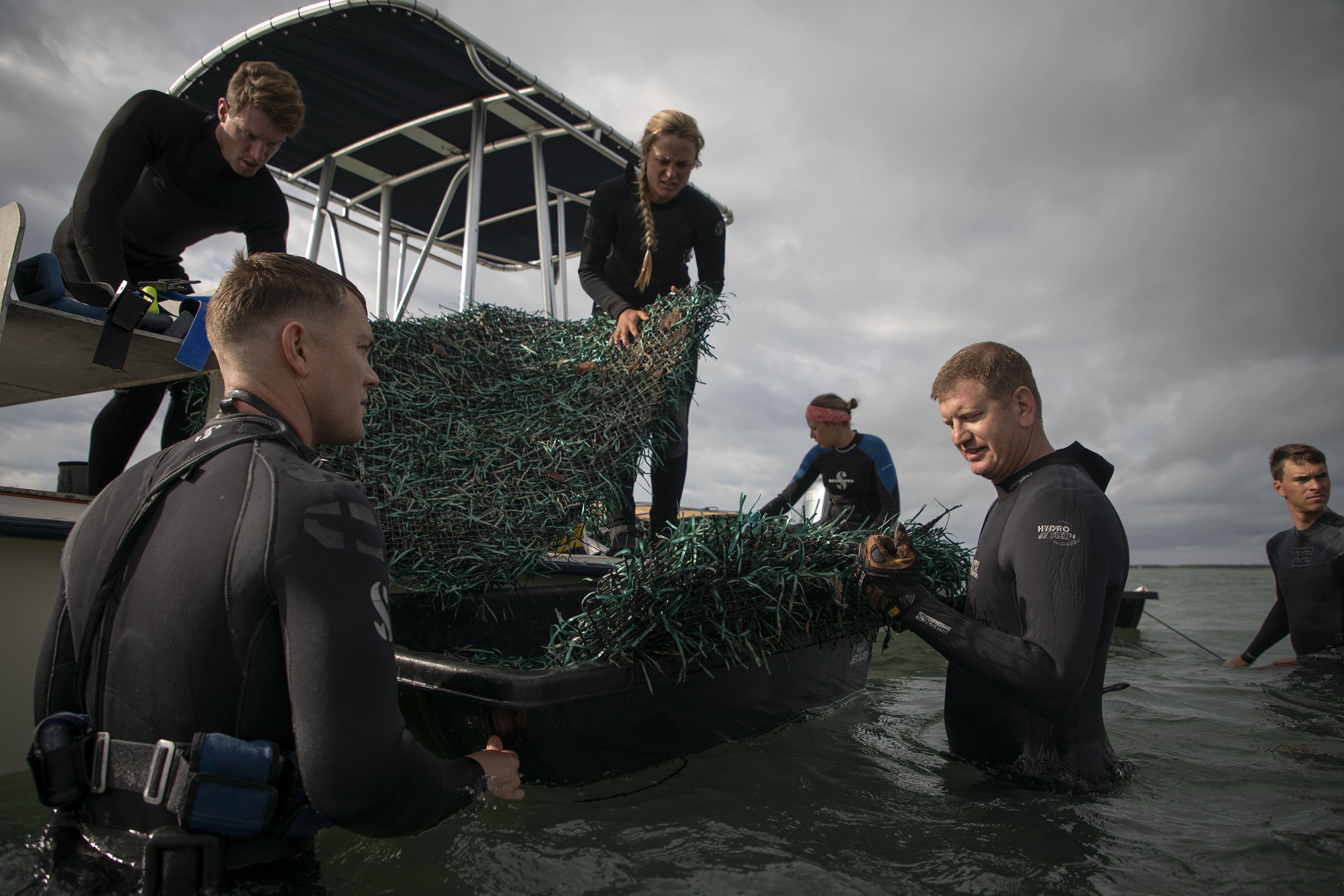
Meanwhile, a team at the UNC Institute of Marine Sciences is forging ahead with a proposed plan for remedying the decline in seagrass populations. Professor Joel Fodrie and his marine biology lab have spent the last two years creating and installing over 2,500 Artificial Seagrass Units, also known as ASUs, in North Carolina’s Pamlico-Albemarle Sound System (See Figure 4)5. They are testing two main kinds of seagrass structure – continuous and fragmented – to identify which type fosters the most growth and diversity in marine life. Fodrie’s team has placed their substitute seagrass beds right beside the real beds for periods of one week at a time and are continuously monitoring the ASU’s to see how much marine life has begun to inhabit them6. Once Professor Fodrie’s lab conclusively determines which kind of seagrass structure is the most suitable for marine species, they can implement Artificial Seagrass Units all across North Carolina’s coastal waters to hopefully save the state’s aquatic ecosystems.
Figure 4. Professor Fodrie’s Lab Installing Artificial Seagrass Units in the Pamlico – Albemarle Sound System Source 4:UNC Institute of Marine Sciences(September 2019)
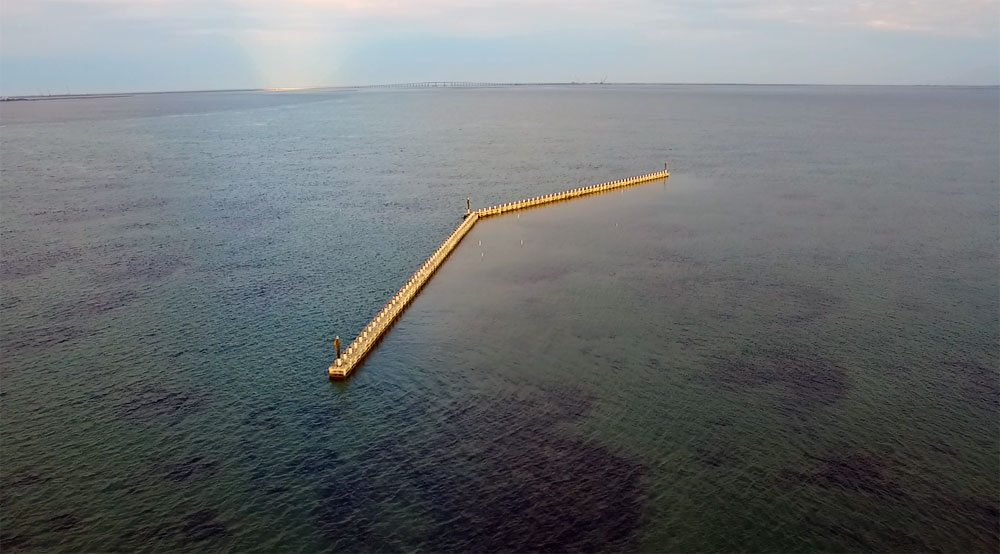
The issue of declining seagrass populations has captured the attention of more than just Professor Fodrie. CSA Ocean Sciences, an international marine environmental consulting firm, has been conducting research about the relationship between withering seagrass patches and powerful water currents. Unlike the researchers at UNC, the scientists at CSA Ocean Sciences believe that the answer to reversing the decline in seagrass lies in controlling wave energy2. Recently, CSA Ocean Sciences announced that a new Wave Attenuation Unit was being built to serve as an “open-water living shoreline” in the midst of a large patch of seagrass in the coastal waters (See Figure 5)2. Their Wave Attenuation Unit utilizes wave forecasting technology to break large waves and strong water currents before they can reach the seagrass beds, thus allowing the seagrass beds to coalesce safely and sustainably2. The effectiveness of the Wave Attenuation Unit in promoting seagrass growth in North Carolina’s coastal waters will be evaluated over the next five years.
Figure 5. CSA Ocean Science’s Wave Attenuation Unit in North Carolina’s Coastal Waters Source 1: CSA Ocean Sciences Incorporation (August 2019)
These fearless trailblazers are paving the road to recovery for North Carolinian seagrasses, but they cannot do it alone. We can all play a part in saving our seagrasses. By reducing our waste, limiting our use of fertilizers and pesticides, exercising caution when boating or fishing, and being cognizant of our environmental footprint, we can make a lasting positive impact in our oceans. If we remain dedicated and diligent in protecting our seagrasses, our marine ecosystems and coastal communities will thrive for years to come.